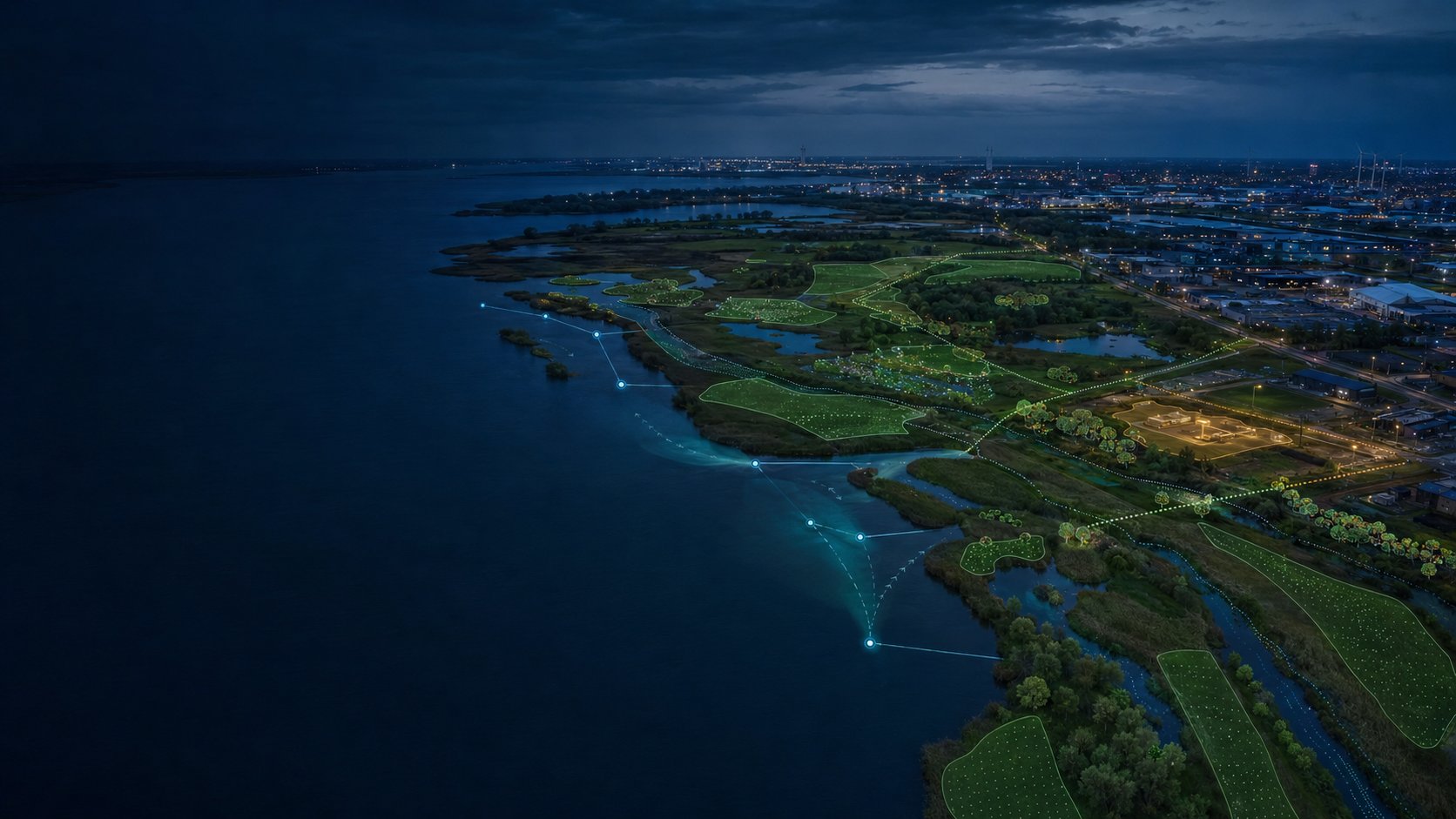
Noise, shadow, vibration, wind — what a plan does to its surroundings. Not a generic note that some impact is expected, but the effect itself: over identifiable homes, at that hour, under the measured weather.
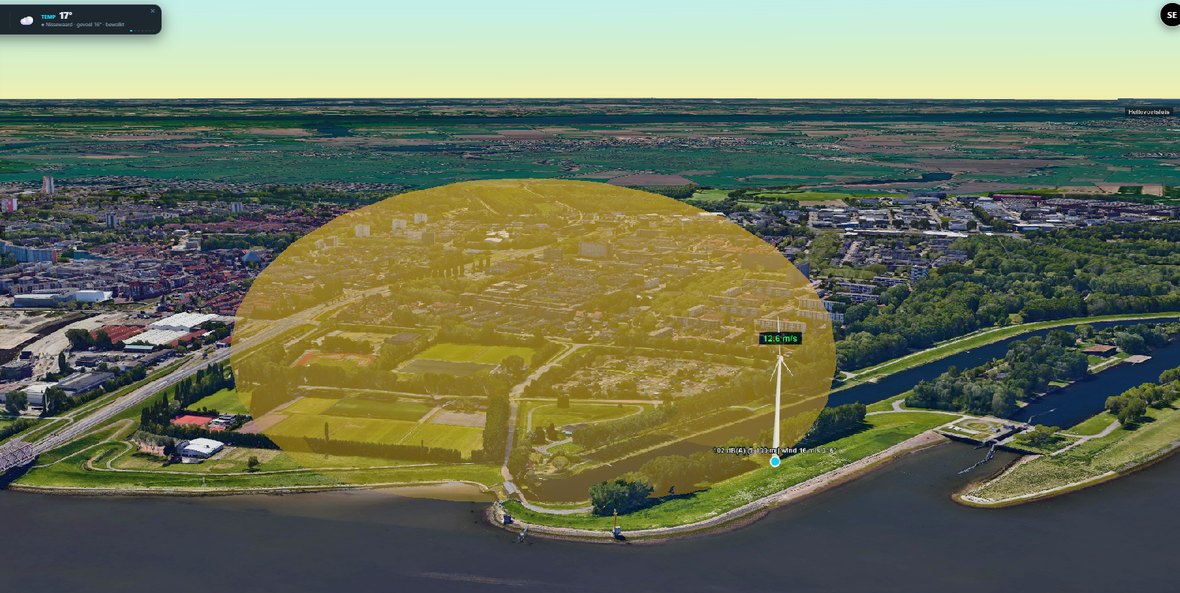
One turbine on the dike: 12.6 m/s at hub height, a source level of 102 dB(A) at 122 m. The contour is not a circle — the prevailing wind skews it, and the built-up area cuts into it.
A defined sound level, over identifiable dwellings, under the measured wind. And which norm applies is a regime, not a single number — since the Nevele ruling the national wind-turbine norms need an underlying plan-MER, so ORB first establishes which regime is in force.
What ORB withholds — it does not test that momentary contour against an annual Lden. That needs the emission term over the past year and the wind statistics at hub height. ORB reports this as a gap rather than issuing an unfounded pass.

A proposed tower of thirty floors and 161 m, placed into the existing skyline. The shadow beneath it is the one cast at 20:00 in July.
Change the date or the hour and the shadow follows. Not a vague warning about lost daylight — the shadow itself: on that dwelling, at that hour, on that day. One clock governs the whole twin — the weather, the trench and the sun are read from it.
The same measured ground, read for the climate a place has to live with — and what a plan does to it.
Environment runs on the same Intelligence Engine as every ORB lens — so an effect lands on identifiable homes, at that hour, under the measured weather, each figure carrying its source, its standard and its margin, and where a norm can’t yet be met honestly, the gap it leaves. Talk to us about bespoke work.
